

Spot Welding · Caps & Shanks · Welding Arms
Spot Welding
Electrodes for sheet-to-sheet joining in carbon steels, galvanized, stainless and AHSS/UHSS. Standard RWMA geometries and custom designs per drawing.
What is Spot Welding?
Spot welding is the most widely used resistance welding process in the automotive and appliance industries. It consists of applying electrical current and mechanical pressure through copper electrodes to melt and join two or more metal sheets at a specific point.
Process success depends on electrode quality, especially tip geometry, electrical conductivity and heat dissipation capability. ALCAVIL manufactures cold-forged caps that ensure longer service life and consistent weld quality.
Spot Welding Products
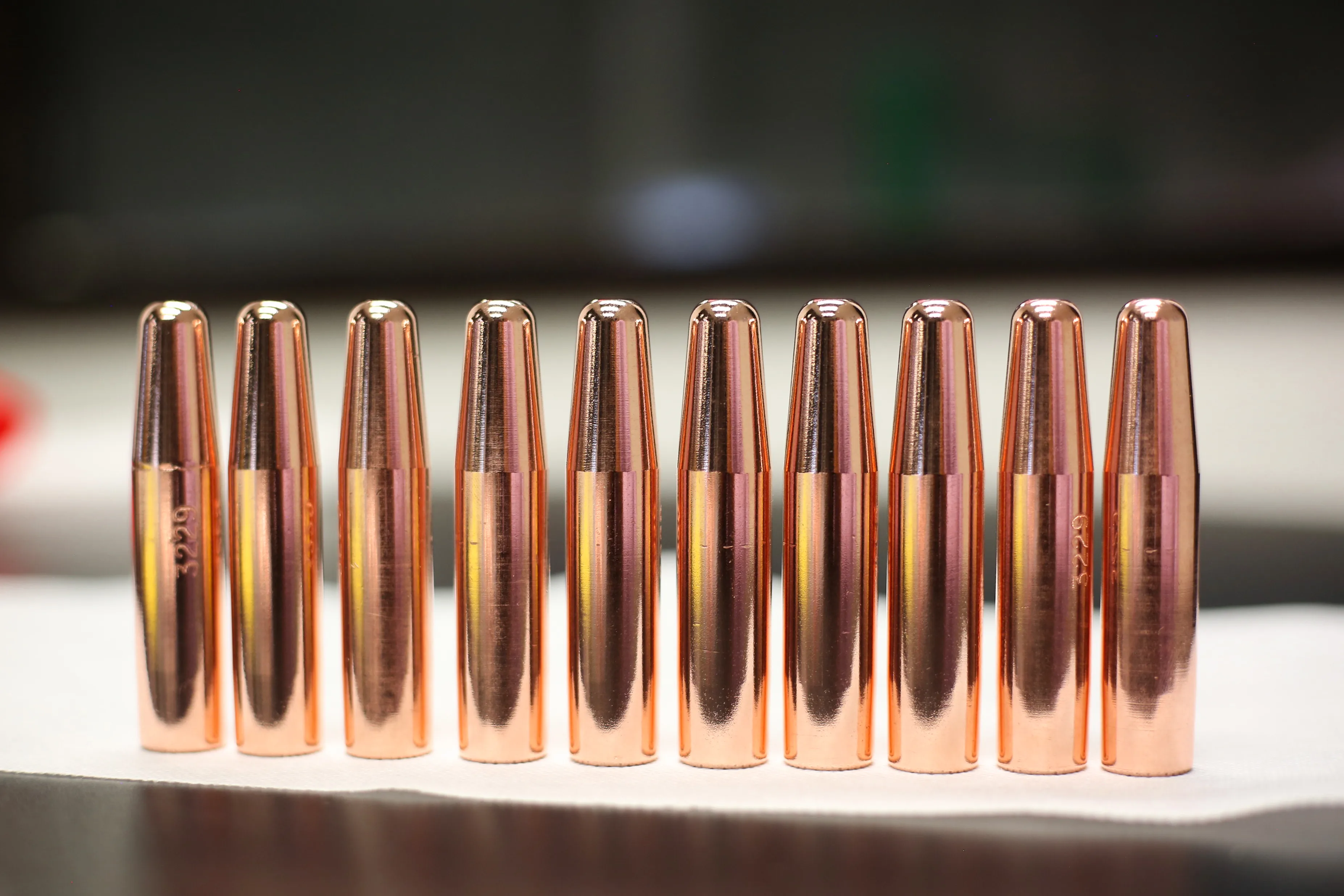
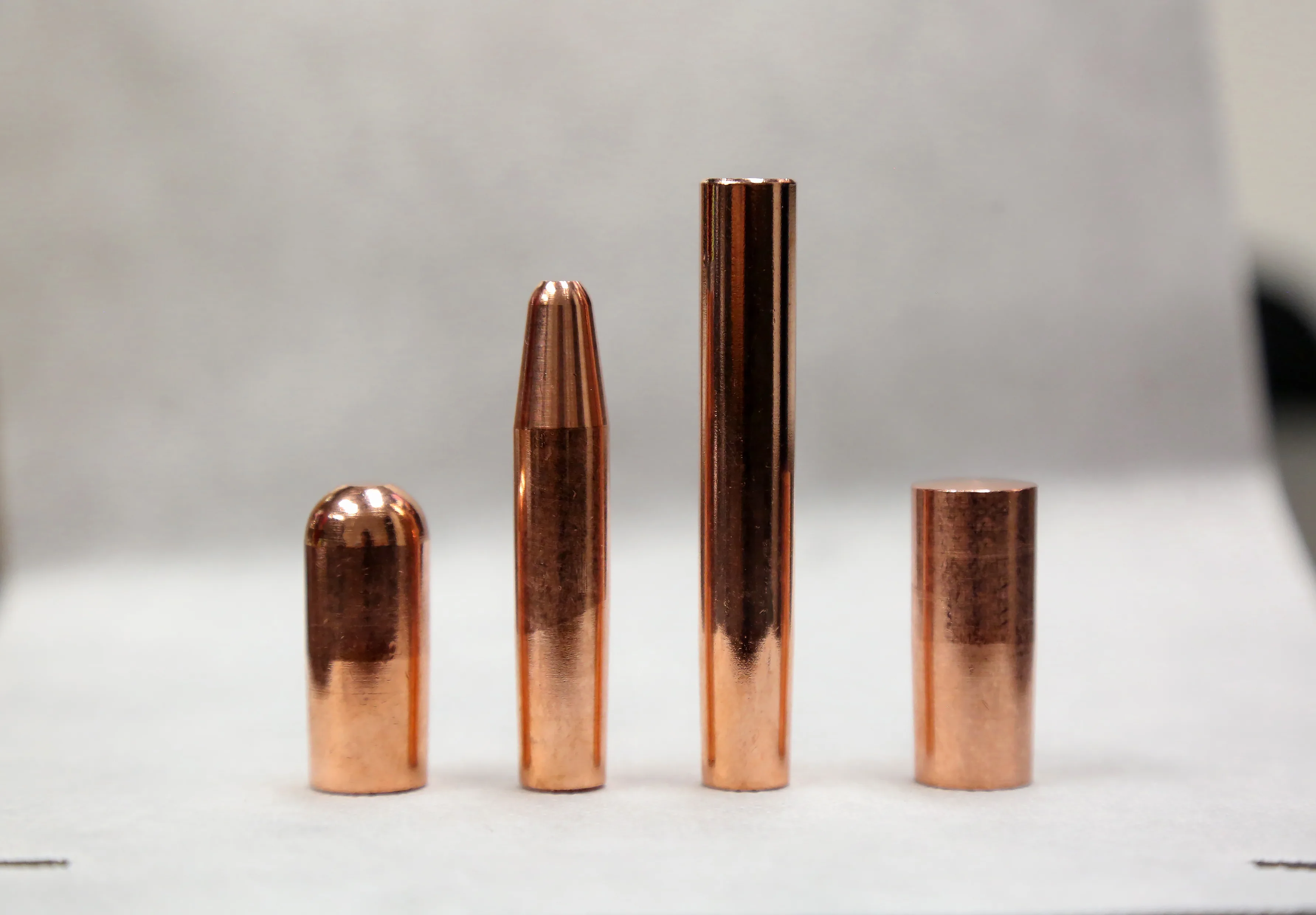
- Cold-Forged Caps (Female/Male) Compact, oriented grain structure for higher conductivity and service life. Standard RWMA geometries (A, B, C, D, E, F) and specials. Available in Class 2 (CuCrZr) and Class 3 (CuCoBe).
- Shanks and Adapters Cone-to-cone connection - Morse #1, #2 and 1:10 (common in Europe and Japan). Ground tapers for airtight seal and maximum current transfer.
- Welding Arms (Electrode Holders / Bananas) Class 2 or Class 3 copper with heat treatment for optimal hardness. For manual guns and welding robots. Internal cooling circuit.
- Shunts / Flexible Connectors Laminated flexible electrolytic copper cables for primary to secondary transformer connection. Custom design per application.
Technical Differentiator – AWS J1.3
Perfect Geometry: Our tapers are precision ground to ensure full contact with the holder. This maximizes current transfer and heat dissipation, reducing premature wear. All materials meet RWMA/AWS J1.3 specifications.
Supported Materials
Our electrodes are designed to work with a wide variety of materials:
- Carbon Steel (CR/HR) Cold-rolled and hot-rolled sheet. Standard Class 2 electrodes.
- Galvanized Steel Zinc coatings require higher hardness electrodes (Class 2 CuCrZr recommended).
- Stainless Steel Higher resistivity requires parameter adjustment. Class 2 or Class 3 depending on thickness.
- AHSS / UHSS Advanced high-strength steels require Class 3 (CuCoBe/CuNiBe) to maintain hardness at high temperature.