Tungsten Class 13 (W) Sales in Mexico
Refractory Metal Faced Electrodes for resistance welding of electrical contacts, copper terminals and silver components. Used by manufacturers of contactors, switches and automotive electrical components in medium-frequency welding machines.
Specifications per AWS J1.3 • ISO 6848 • RWMA Class 13 • Precision Metrology
ALCAVIL is a leading supplier of Tungsten RWMA Class 13. Insert electrodes for electrical contact and terminal welding. Permanent stock in Monterrey. Request quote →
Tungsten Class 13: When to Use It
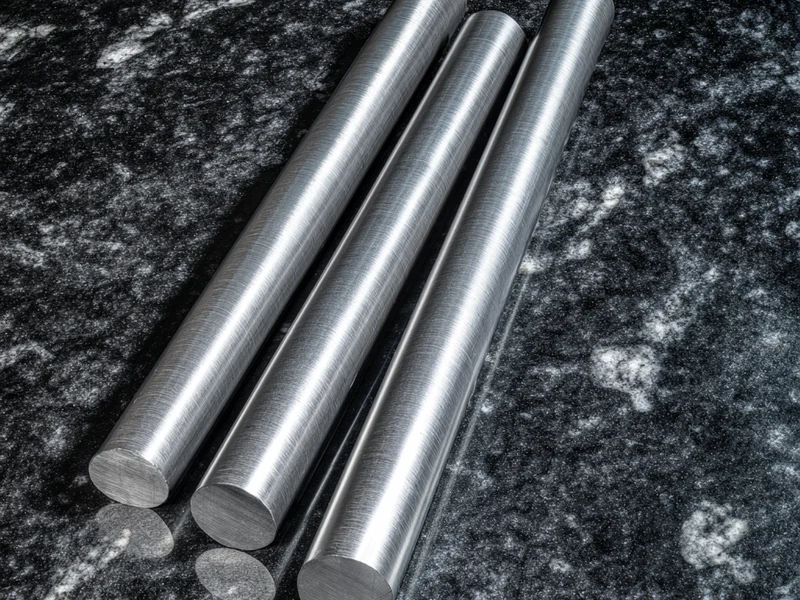
Tungsten (RWMA Class 13) is a refractory metal with the highest melting point of all metals (3,422°C). Its main application in resistance welding is for highly conductive materials: silver contacts, copper terminals, brass components. Unlike copper electrodes, tungsten does not alloy with the base material.
When NOT to Use Tungsten (and What to Use Instead)
Tungsten resists more heat than any other metal — but it's brittle like glass.
❌ Don't use Tungsten if:
- Your process involves force or impact — tungsten chips and fractures with sudden loads (drop it, it shatters).
- You need a special machined geometry — tungsten can't be turned or ground easily without chipping.
- Nut/stud projection on steel — brittleness causes thermal shock fracture.
- Spot welding steel (regular, galvanized, coated) — that's a different process, use Classes 1-3.
📋 Plant Examples:
- Silver contact cell, tungsten insert chips frequently → The type of force from the machine is not compatible with tungsten. Switch to molybdenum - more "forgiving".
- Copper cross-wire with tungsten, excellent life but need special geometry → Molybdenum accepts conventional machining. Tungsten requires EDM.
✓ Use this instead:
- Molybdenum (Class 14) — More ductile and machinable. Same heat resistance but "bends rather than breaks".
- Elkonite/CuW (Classes 10-12) — For nut projection on steel. Combines tungsten's hardness with copper's conductivity.
⚡ 30-Second Checklist:
- □ Welding non-ferrous materials (silver, copper, brass)? → Tungsten is correct
- □ Does your tungsten chip or break? → Switch to molybdenum
- □ Need special machined geometry? → Molybdenum (accepts conventional machining)
- □ Is it projection on steel? → DON'T use tungsten, use CuW
Not sure if tungsten or molybdenum is better for your process? Tell us your application and machine type - we'll help you decide →
Our Plant Experience
- Silver contacts: This is the most common application - tungsten doesn't alloy with silver during welding.
- Tungsten is brittle: It's harder than molybdenum (theoretically lasts longer), but it's brittle like glass - it chips. We've seen processes where it breaks due to the type of force the machine uses.
- If your tungsten breaks: Molybdenum is more "forgiving" and machinable. Same conductivity, but handles certain types of force better.
- If molybdenum doesn't last: Switch to tungsten - it's harder and has longer service life (when it doesn't break from brittleness).
- Lanthanated (WLa) for hot working: WLa15 has more heat resistance and allows greater hot working capacity. Similar to TZM for molybdenum.
- Sometimes the client specifies it: Often the specification comes from the factory client and must be followed - tungsten or molybdenum as requested.
Key point: Tungsten is specific for highly conductive materials. If you're welding steel, galvanized, or nuts/studs, you need a different material. See Copper-Tungsten (CuW) or consult our materials guide.
Alloy Catalog by Color Code (ISO 6848)
Color codes reference ISO 6848 standard (originally for TIG welding). In resistance welding we use this nomenclature to identify composition.
Pure Tungsten (WP)
ISO Code: GreenFor general welding applications of materials with good conductivity: copper, silver inserts, cross-wire welding and resistance brazing.
Lanthanated Tungsten (WLa) - Replace pure tungsten with superior performance
WLa10 - 1% Lanthanum
ISO Code: BlackMedium volume copper terminal welding. Electrical connectors and busbars.
WLa15 - 1.5% Lanthanum
ISO Code: GoldNon-radioactive replacement for WTh20. High volume copper terminals. Braided wire to connectors. Silver components.
WLa20 - 2% Lanthanum
ISO Code: BlueHigh current copper busbars. Intensive 24/7 production. Power switch silver components.
Tungsten vs Copper-Tungsten: Correct Application
Tungsten Class 13 should NOT be used for nut projection welding on steel - its brittleness causes thermal shock fracture. For nut welding use Copper-Tungsten (CuW) Classes 10-12. Tungsten is specific for highly conductive materials: copper, brass, silver, aluminum.
Comparison Table - Tungsten Class 13 Family
| Property | WP | WLa10 | WLa15 | WLa20 |
|---|---|---|---|---|
| Lanthanum Oxide | 0% | 0.8-1.2% | 1.3-1.7% | 1.8-2.2% |
| Density (g/cm³) | 19.25 | 19.20 | 19.18 | 19.15 |
| Thermal Shock Resistance | Baseline | Good | Very Good | Excellent |
| Production Volume | Low | Medium | High | Intensive |
| Typical Application | Basic cross-wire | Cu terminals | High volume | 24/7, high current |
Technical Documentation
Frequently Asked Questions about Tungsten Electrodes
What are tungsten insert electrodes used for?
Tungsten insert electrodes are used in resistance welding of highly conductive metals: copper, brass, silver and aluminum. Their high density (19.25 g/cm³) and melting point (3,422°C) prevent the electrode from alloying with the base material, ensuring clean welds on electrical terminals, cross-wire welding and contact components.
What is the difference between pure tungsten (WP) and lanthanated tungsten (WLa)?
Pure tungsten (WP) is ideal for low volume applications. Lanthanated tungstens (WLa10, WLa15, WLa20) contain lanthanum oxide that improves thermal shock resistance, allowing higher production volume. WLa15 (1.5% La₂O₃) is the non-radioactive replacement for thoriated tungsten WTh20. Higher lanthanum percentage means greater durability in intensive production.
Can Class 13 tungsten be used for nut projection welding?
No. Class 13 tungsten is brittle and can fracture from thermal shock when welding nuts on steel. For nut welding and stud welding, use Copper-Tungsten (CuW) Classes 10, 11 or 12, which combines copper conductivity with tungsten resistance per AWS J1.3.
What standard applies to tungsten electrodes in resistance welding?
AWS J1.3 (Specification for Materials Used in Resistance Welding Electrodes) classifies tungsten as RWMA Class 13. Color codes (green, black, gold, blue) follow ISO 6848 standard originally for TIG, but adopted in resistance welding to identify material composition.
Manufacturer Equivalences — Tungsten Class 13
Cross-reference of part numbers across manufacturers for RWMA Class 13 tungsten (per RWMA Bulletin 16, Table 18.13).
| Manufacturer | Part Number |
|---|---|
| RWMA / AWS J1.3 | Class 13 (Tungsten) |
| CMW | 100W |
| Centerline (CL) | CL-13 |
| Stillwater | T100W |
| Tuffaloy | T100W |
| Welform | CL-13 |
Source: RWMA Bulletin 16, Table 18.13 — Comparative Alloys. See full equivalence table →
ALCAVIL Manufacturing Capabilities
We manufacture tungsten and molybdenum insert electrodes with precision technology. EDM machining for exact cuts in refractory materials and certified metrology to ensure tolerances.
Need tungsten or molybdenum insert electrodes for your application?
Request QuoteIndustrial Applications of Insert Electrodes
Contactors & Switches
Silver contact welding in industrial contactors for Schneider, Siemens, ABB.
Automotive Electrical Terminals
Copper terminal welding for wire harnesses (Phoenix, BorgWarner, Milwaukee).
Cross-Wire Welding
Cross-wire welding for grids, filters and copper/brass meshes.
Projection Welding
Projection welding of copper components where electrode contamination must be avoided.
Resistance Brazing
Resistance brazing with refractory electrodes that don't alloy with filler material.
Hot Crimping
Hot crimping of cables and connectors where high temperature without adhesion is required.